
What kind of writer are you?


What kind of writer are you? It’s a question all writers get. People have a need to pin a label on a writer. That way they’ll know which file drawer to put him or her in. Let’s take a look at a few well-known writers and ask them the same question. First, Sir Arthur Conan Doyle, the man who created Sherlock Holmes. A mystery writer, right? Well, not exactly. Aside from creating the most famous detective in the world, Conan Doyle also created Professor Challenger. Never heard of him? He was a seminal science fiction character. He was also the literary ancestor of Indiana Jones and thousands of other fictional scientist/explorers. Professor Challenger appeared in short stories and novels, the most well-known being, The Lost World. It was made into a movie a number of times. It’s about Challenger’s discovery of a secret valley where dinosaurs still live. So, Conan Doyle was a mystery and science fiction writer. That’s pretty simple. Except it’s not accurate. Conan Doyle also wrote supernatural horror stories, historical novels, mainstream, non-fiction, true crime, romance, poetry, and what would now be called new age.

Let’s look at a more contemporary example, Ray Bradbury, author of The Martian Chronicles, and Fahrenheit 451. At one point, while he was still alive, his books had this slogan on them: “World’s Greatest Living Science Fiction Writer.” The only problem is that it wasn’t true. In fact, much of what Bradbury wrote was fantasy. He also wrote horror stories, suspense, mystery, mainstream, non- fiction, poetry and even children’s books.
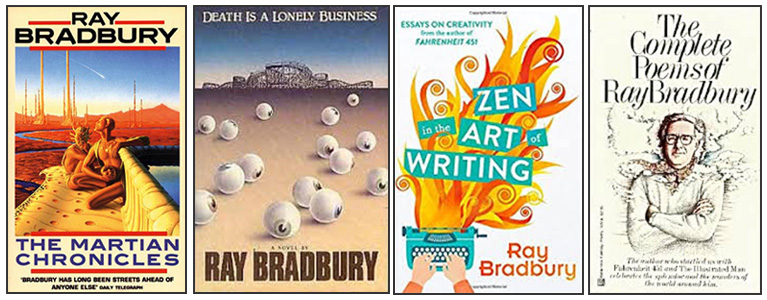
ray bradbury

Here’s another writer you may have heard of, Stephen King. Horror writer, right? Well, he does write horror, but does that make him a horror writer? Aside from Carrie, The Shining and others, he has also written mainstream, suspense, fantasy, non- fiction, mystery and crime stories.

One more writer, Isaac Asimov. Now, here we definitely have a science fiction writer. He’s the author of The Foundation series, The Galactic Empire series, the creator of the three laws of robotics. If ever there was a science fiction writer, it was Asimov. Uh, not so fast. Asimov also wrote mysteries, fantasy, non-fiction books about science, scholarly, annotated books, memoirs, even limericks.

This list of unclassifiable authors is by no means limited to the few writers I cited. So many writers who have become known for one type of subject, write about a variety of things. People like to categorize writers as if they were produce in a supermarket. The problem is that writers aren’t heads of lettuce. What kind of writer are you? The kind who writes.


TEN POPULAR WRITING MYTHS

Writing and publishing is a field fraught with false beliefs, half truths and outright lies that are accepted as reality. Usually those that know the least are the most vocal. One of the worst myths is that writing is easy and anyone can do it. It’s not. Writing is hard work and takes years to master. Here are a few other myths about writing debunked.


  1. To succeed as a writer you must be really, really good.
    Not true. You just have to be professional and competent. There are plenty of mediocre writers making a great living.baby writer
  2. Writers are born not made.
    Not true. I know of no baby writers. Writing requires much reading and plenty of life experience.
  3. Almost no one can make a living at just writing.
    Not true. There are plenty of writers (often writing in a genre) who do very well financially. If you insist on only writing literary fiction, consider also teaching.
  4. The best selling genre is mystery.
    It’s actually romance.lucky
  5. To be successful as a writer you need a lot of luck.
    Maybe. But I notice writers that are the most successful are usually also the most prolific.
  6. In order to write a novel, you need a great idea.
    Not true. There is nothing new under the sun, it’s just the approach, handling, viewpoint and style that varies. What may seem like a very old idea in the right hands can be gold.ideas
  7. Ideas are hard to get.
    Not true. This is one of the most oft repeated myths. In fact, ideas are everywhere. An overheard conversation, a place, an object, an event, these are just a few of the many ways to find ideas.
  8. It’s good to show your writing to friends and family.
    Not true. It’s a lousy idea. Only show your work to a professional writer or editor. No one else is qualified to know anything about writing.
  9. In order to write you must have lots of free time.
    Not true. Many people write on their way to work, at night, on weekends, or during vacations.
  10. Imitating another writer’s style is a bad way to learn to write.
    Not true. Many excellent writers began by imitating a writer they admired and then eventually found their own voice and style.

The above list contains only a fraction of the many myths about writing. Here’s one more: If you can write an email you can write a short story or novel. This is ridiculous. An email, whether personal or business, has nothing to do with dramatic structure, character, conflict, action or resolution. An email is a letter, not a story. If you can add, subtract and multiply, that does not make you an astrophysicist. I hope none of this is in any way discouraging. If you want to write… write! Don’t let anyone tell you that you can’t. As Walt Disney once said, “If you can dream it, you can do it.” And that’s not a myth.

Ten Things a New Writer Needs to Know

antique type writerI’ve noticed that beginning writers make a lot of the same mistakes.  Here are a few things I’ve learned that may be helpful to you. Some of these might look obvious and easy. So does juggling, ice skating and hang gliding. They are not easy. Neither are the things on this list.


  1. Keep sentences short and simple.
  2. Don’t include anything that does not advance the story or help define the characters.
  3. Be careful about characters addressing each other by name. People who know each other seldom do.
  4. If you’re writing a story set in our time, keep the dialogue and description informal. If not, you will sound like a Victorian novel.
  5. Don’t explain things when you don’t have to.
  6. Don’t have characters tell each other things they know, or should know.
  7. Explain statements when needed.
  8. writer laptopDon’t repeat dialogue and descriptions. Many beginning writers feel the need to tell the reader the same thing two or three times using different words. Give the reader credit for understanding you the first time.
  9. Refer to Elements of Style by Strunk and White whenever you can.
  10. Read the great French mystery writer, Georges Simenon, to see how simple sentences and a deliberately limited vocabulary can be used to tell very complicated stories.

hand writerCheck out the new webcomic Tom’s Tiki Bar, written by me and drawn by Jason Chatfield.

&raquo www.tomstikibar.squarespace.com

HOW TO START WRITING

finger pointingI meet people all the time who say they want to write. Many of them don’t know where to start or even how to start. A lot of people are worried about “doing it wrong” or feel they can’t begin unless they get “permission.” They don’t know who they want permission from but they know that there must be someone out there who can give it to them.

fear cartoonAll this comes from fear. Fear of failing, fear of being judged, criticized or rejected. These are very real and universal fears. Every writer has them to one extent or another. The problem is that these fears can stop many people from even writing a single word. The fears come from your inner critic. This critic is far worse than any friends, family, or even professional critic can be. This inner critic tells you that you’re no good, that you’re not a “real” writer, that there are more talented writers than you; that your chances of getting anywhere are a zillion to one, so why bother? And other similar negative messages.

What can you do about this critic? The first thing you need to know is that you’re not alone. Every writer has an inner critic. Some writers are better than others at shutting this critic up. How do you do that? It takes practice and a different way to approach the problem.

Here are a few things that might help you:

  1. Don’t talk about your work with anyone before you write it. I mean anyone. No exceptions. I’ve had people ask me what I’m working on and I say, “I can’t tell you.” They sometimes say, “Why, are you afraid I’m going to steal your idea?” “No,” I say, “I’m afraid you’ll tell me how much you like it and then I won’t write it.” Talking about something you’re going to write is a great way to never actually write it.
  2. After it’s written only show it to a friendly and kind professional editor or writer. No one else’s opinion matters. Do doctors show their work to plumbers for help and approval?

man at computer writingAs far as actually getting started: find a safe place to write where you won’t be disturbed. That can be a private room, your favorite coffee shop, a library, a park bench anyplace where you feel comfortable. Once you find this place give yourself time to write. Do it at your own pace. And remember you don’t have to show your work to anyone. You are allowed to write for yourself alone if that’s what you want. Don’t be the judge and jury of your work. Your early efforts will be just that, early efforts. Be okay with that. Writing is like learning to play an instrument. You will not be ready to give concerts in only a few weeks. Be patient with yourself.

If you forget about money for a few minutes, think about the reasons you might motivate you to write. Here are a few:

  1. It’s fun.
  2. You have a story you really want to tell.
  3. It gives you a sense of fulfillment.
  4. You like researching a story.woman writing in park
  5. It’s therapeutic and healing.
  6. It makes you forget your problems.
  7. It’s a way to escape.
  8. It’s entertaining to you.
  9. It teaches you about things.
  10. It relaxes you.
  11. It’s meditative.
  12. You don’t know why.

You may have other reasons to add to the list, but you’ll notice that all these reasons to write are for you. Not one of the things on this list has to do with anyone but you. What’s not on the list:

To win love from someone else

To be liked and admired

To get compliments and praise

To get fans

Writing is like cooking. Imagine you’re alone and you want to eat dinner. You select your favorite foods and the ingredients that you like. You put in all your favorite spices. You cook everything and then it’s done and you are about to eat it. Unexpected guests arrive. You have some extra food so you offer it to them. They accept. Some like what you cooked and others don’t. But it doesn’t matter. You cooked it for yourself. You like it. If others do or don’t that’s their choice but it doesn’t change the fact that you cooked what you like. And you still like it.

Write for yourself first. If others like it that’s nice, but please yourself first. Not everyone will like what you write, but make sure that the most important person does. You.

woman writing in her diaryHow do you write? You start writing. Do it a lot so it becomes a habit. When that happens, each word will cease to have the monumental importance that it does now. This will take some of the pressure and stress out of the process. You will begin to understand that nothing you write is carved in stone. You can change anything at any time. Your writing is like your own personal friend and support group. It’s a safe place without judgement. Be gentle with yourself. Any place you start is the right place. There is no right or wrong way to do it.

If you don’t like what you write you can always tear it up or delete it. Or you can rewrite it. Most writing requires lots of rewriting and revision. This is how everyone writes. We don’t necessarily get it right the first time. Keep at it. You’re in charge. Go ahead, start. Give yourself permission.